
Many people with type 2 diabetes struggle to take metformin as prescribed. The tablets are often large, which makes swallowing difficult, especially if you also have conditions that weaken swallowing muscles, narrow the esophagus, or reduce saliva. These challenges, combined with common stomach side effects, can make staying on treatment harder than it should be.
Studies show that up to 40% of people have trouble swallowing solid tablets, and this directly reduces adherence and the effectiveness of treatment. For something as essential as metformin, which supports long-term blood sugar control, this becomes a real barrier to managing diabetes properly.
So, can metformin be crushed or split in half? Here, you’ll learn what’s safe, what isn’t, and what alternatives exist if swallowing tablets feels impossible.
How to take metformin?
Metformin is taken by mouth, and the way you use it depends on the type your doctor prescribes.
The standard version, called immediate-release, is usually taken twice a day with meals. There’s also an extended-release form, which is designed to release the medication more slowly, so most people only need to take it once a day, often with their evening meal.
Can you crush or cut metformin?

Extended-release metformin tablets should never be split, crushed, or chewed. Immediate-release tablets can sometimes be split or crushed, but this is considered off-label administration, so it should only be done under the guidance of your doctor.
Why extended-release metformin must not be crushed
If you’re prescribed extended-release (ER) metformin, such as Glucophage XR, Fortamet, or Glumetza, you should always swallow the tablet whole. Do not crush, cut, or chew it. These products are designed with special technology that carefully controls how the drug is released in your stomach and intestines.
The way this technology works is built into the tablet’s structure, coatings, and internal design. In fact, there are several different extended-release designs used for metformin:
-
- Hydrophilic matrix tablets – These swell up in the stomach and release the drug slowly.
-
- Gastric-retentive tablets – These are designed to stay in the upper stomach for several hours while gradually releasing the drug.
-
- Osmotic tablets – These have a tiny laser-drilled hole that pushes the drug out at a steady, controlled rate.
In a clinical pharmacokinetic study, ER tablets provided about 15% more total absorption (bioavailability ~115%) than the standard immediate-release (IR) tablets. ER tablets also produced a slower and steadier rise in blood levels of metformin, instead of a quick spike. This is usually a good thing because it means steadier blood sugar control and often fewer stomach side effects.
Another study found that Glumetza showed more consistent absorption across different strengths, with about 80% relative bioavailability from the lowest dose to the highest dose. The immediate-release form only reached about 58%.
Because these benefits are tied to the dosage form, crushing, cutting, or chewing would remove the advantage. Instead of releasing slowly, a large dose could hit your system all at once. This can mean more stomach upset without better glucose control. It also means a loss of the once-daily convenience that extended-release products are designed to give.
How to cut IR metformin in half safely

Immediate-release metformin, such as Glucophage, does not have a time-release structure. In many care settings, when patients have trouble swallowing, the IR tablets are split or crushed and mixed with a soft food.
The Specialist Pharmacy Service notes a general rule. If a tablet isn’t extended- or modified-release, and it has a score line, it can often be split or crushed to make it easier to take, as long as it doesn’t have any special coating. Still, it’s always important to check your specific product with a pharmacist before doing this.
If you’ve been prescribed IR metformin and your doctor or pharmacist has confirmed it’s safe to split, here’s how to do it correctly.
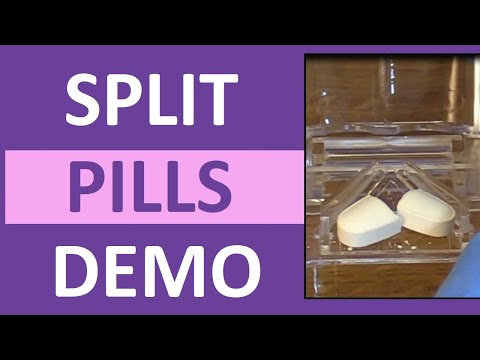
Reminder: This applies only to immediate-release metformin. Never split or crush extended-release versions like Glucophage XR, Fortamet, or Glumetza.
Is metformin available in liquid form?
In 2020, a liquid form of extended-release metformin called Riomet ER was introduced as an oral suspension. It was sold in 16-ounce bottles and came in strawberry and grape flavors. In taste studies, people strongly preferred it over crushed IR metformin tablets.
That same year, however, one lot of Riomet ER was voluntarily recalled after testing showed NDMA levels above the FDA’s safety threshold. NDMA is considered a probable human carcinogen, so even small amounts above the limit trigger action. The recall affected only that specific lot, not every bottle on the market, and no adverse events were reported at the time.
Since then, Riomet has been moved to the FDA’s “Discontinued Drug Product List.” This means it hasn’t been withdrawn for safety reasons, but it’s no longer widely stocked, making it difficult for most patients to find.
How to tell what you have in your bottle
Look at the printed name on the pharmacy label. If you see XR or ER, that is usually extended-release. Brand examples include Glucophage XR, Fortamet, and Glumetza. If your tablet is immediate-release, the pharmacy label may simply refer to it as metformin.
You can also check the package insert or the patient leaflet. Extended-release versions state that the tablet must be swallowed whole.
Putting it all together
Metformin comes in two main forms, immediate-release and extended-release. Immediate-release tablets can sometimes be split or crushed if your doctor approves, but extended-release tablets must always be swallowed whole. Crushing or cutting ER tablets destroys their slow-release design, leading to side effects and loss of effectiveness.
If you have trouble swallowing, ask your doctor about switching to immediate-release tablets, smaller doses, or other options. Always check your prescription label to know which type you have, and confirm with your pharmacist before altering any tablet.
Related Articles


Frequently Asked Questions
Sources
McCloskey, A. P., Penson, P. E., Tse, Y., Abdelhafiz, M. A., Ahmed, S. N., & Lim, E. J. (2022). Identifying and addressing pill aversion in adults without physiological?related dysphagia: A narrative review. British Journal of Clinical Pharmacology, 88(12), 5128–5148. https://doi.org/10.1111/bcp.15463
Schwartz, S. L., Gordi, T., Hou, E., Cramer, M., Heritier, M., & Cowles, V. E. (2008). Clinical development of metformin extended-release tablets for type 2 diabetes: an overview. Expert Opinion on Drug Metabolism & Toxicology, 4(9), 1235–1243. https://doi.org/10.1517/17425255.4.9.1235
Gusler, G., Gorsline, J., Levy, G., Zhang, S. Z., Weston, I. E., Naret, D., & Berner, B. (2001). Pharmacokinetics of metformin Gastric?Retentive tablets in healthy volunteers. The Journal of Clinical Pharmacology, 41(6), 655–661. https://doi.org/10.1177/00912700122010546
Research, C. F. D. E. A. (2020, September 23). Sun Pharmaceutical Industries, Inc. issues voluntary nationwide recall of RIOMET ERTM (Metformin Hydrochloride for Extended-Release Oral Suspension) due to N-Nitrosodimethylamine (NDMA) content above the acceptable daily intake (ADI) limit. U.S. Food And Drug Administration. https://www.fda.gov/safety/recalls-market-withdrawals-safety-alerts/sun-pharmaceutical-industries-inc-issues-voluntary-nationwide-recall-riomet-ertm-metformin
BioSpace. (2020, February 27). Sun Pharma launches RIOMET ER oral suspension in the U.S. https://www.biospace.com/sun-pharma-launches-riomet-er-oral-suspension-in-the-u-s


